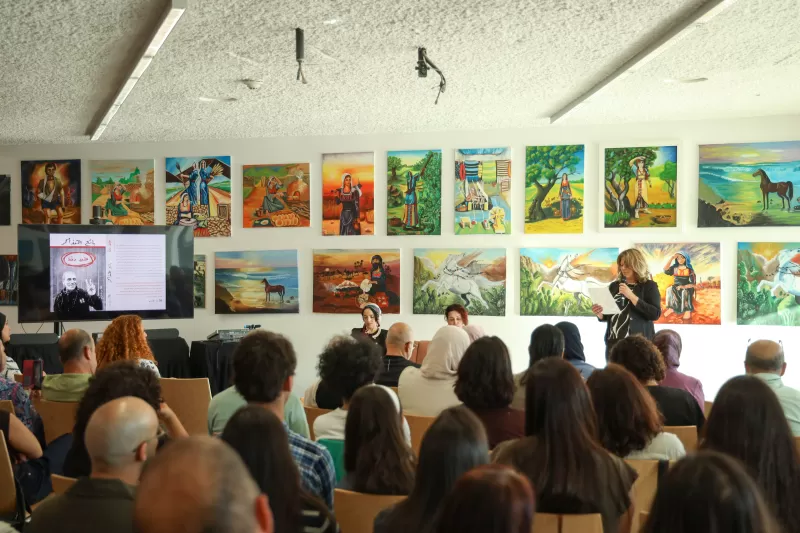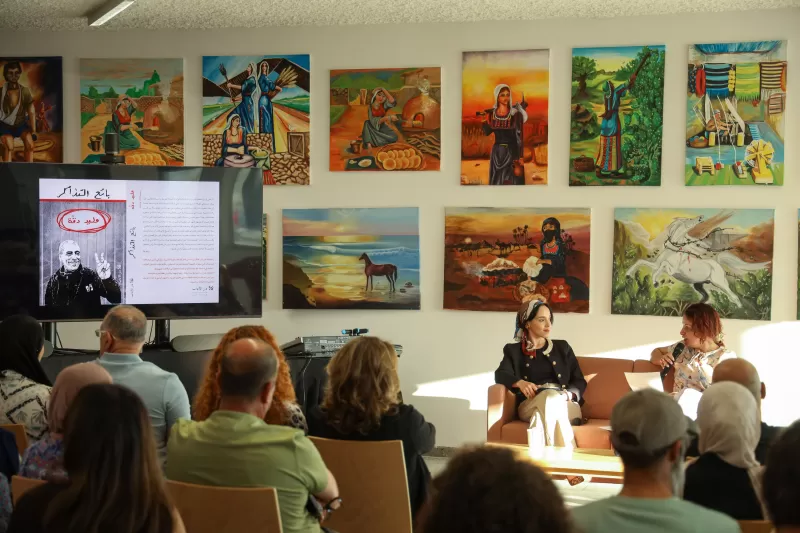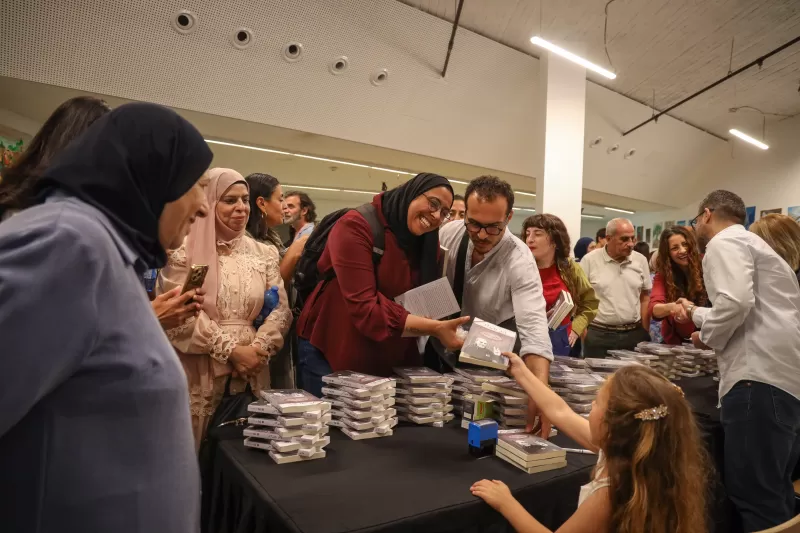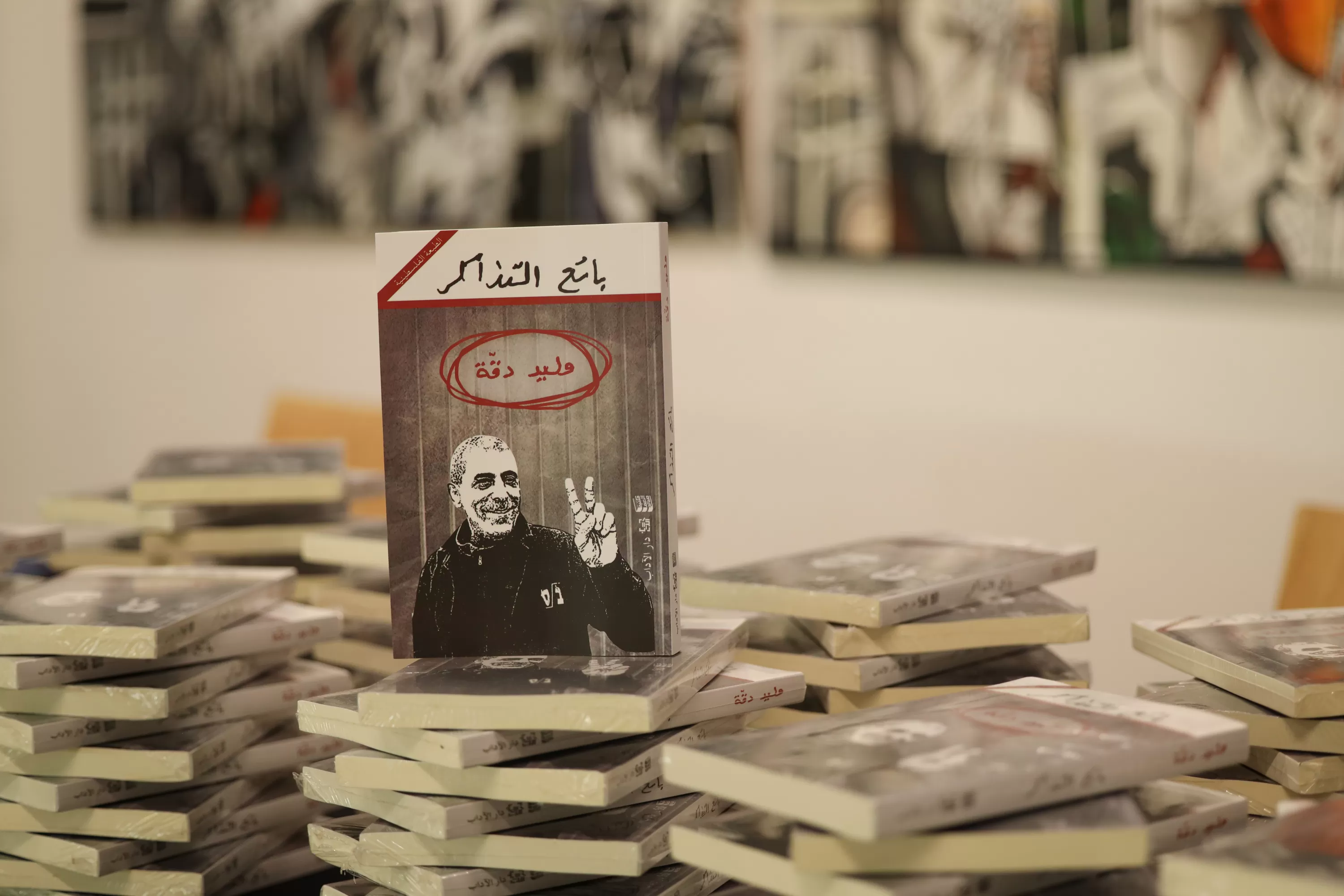
Ramallah – The Palestinian Museum hosted the launch of The Ticket Seller, the autobiography of Palestinian prisoner, martyr, and thinker Walid Daqqa, on Saturday 18 July 2026. Marking what would have been his 65th birthday, the event brought together Daqqa’s wife, Sanaa Salameh; Palestinian writer Ahlam Bsharat; and scholar Qasam al-Haj, alongside members of his family and an audience drawn from Palestinian literary and cultural circles.
The evening invited a reading of The Ticket Seller as more than a personal chronicle. The autobiography follows Daqqa from childhood in Baqa al-Gharbiyye and the formation of his political consciousness, through years of captivity, to his final years, when writing remained his way to think, remember, and hold on to life. In tracing his life, the book opens onto questions of freedom, identity, memory, and time.
Salameh opened the event with a reflection on his enduring presence, marking his birthday as an act of remembrance and an affirmation of a legacy still unfolding. “Today, we are not simply marking Walid’s birthday; we are celebrating a presence that lives on among us,” she said. This was followed by recordings in Daqqa’s own voice, in which he returned to moments from his life, the early days of his imprisonment in Shikma Prison, and his reflections on time, writing, and freedom.
A conversation between Bsharat and al-Haj then turned to the long making of The Ticket Seller. Written over nearly two decades in captivity, the autobiography emerged in fragments: letters, papers, and audio recordings smuggled out at different moments, before Salameh and Abdul Rahim al-Shaikh gathered and edited the material for publication by Dar al-Adab in Beirut.
The discussion traced how fragments of memory were recovered and threaded into a coherent text that preserved Daqqa’s voice and style. It also drew out the book’s central questions: freedom and time, the fear of forgetting, and writing as a way of holding memory against isolation. Imprisonment emerged not simply as a place of confinement, but as a condition pressing on questions of identity, language, justice, and relation to others. The Ticket Seller restores the Palestinian prisoner as a full human presence: writer, thinker, father, captive, and freedom fighter.
Al-Haj read the autobiography as returning Daqqa to the present: “a voice still alive in memory and on the page.” She recalled his words, “I will not let them write the final line,” seeing in them the measure of his struggle against prison and erasure, and his insistence that writing remain an act of freedom.
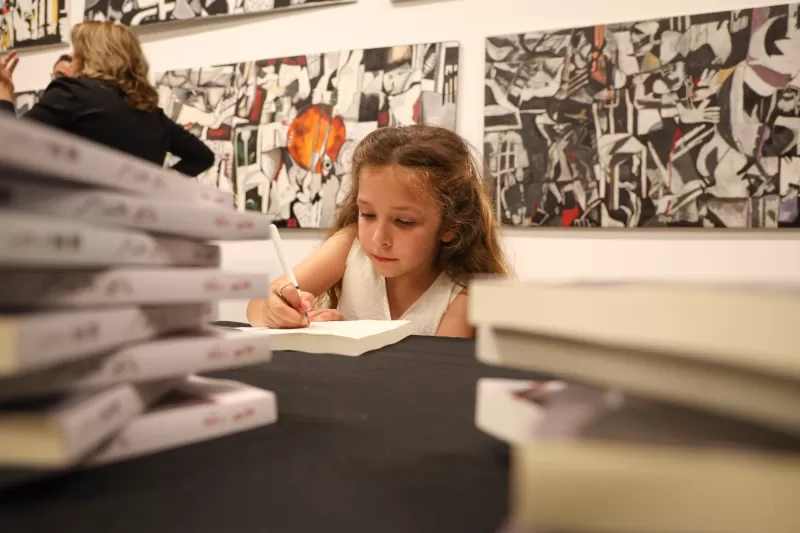
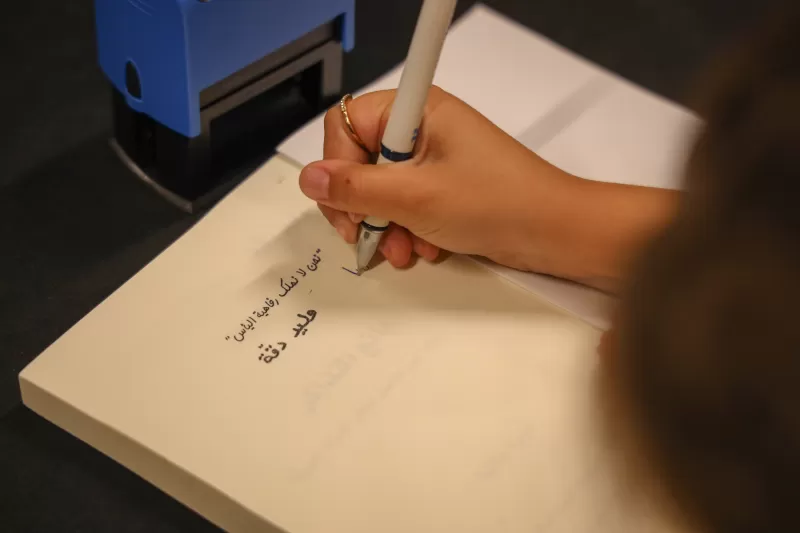
The evening concluded with a recorded message from Daqqa to his daughter, Milad: a reflection on fatherhood, their relationship, and the distance captivity had imposed between them. Milad then signed copies of the book.