
Birzeit, Palestine, 29 November 2026
The Palestinian Museum launches “My Name is Palestine” to coincide with the International Day of Solidarity with the Palestinian People. Made possible through the generous support of Zahira Dahdul and Jawad Ali, the digital exhibition explores the interplay of music and song with Palestinian life through the past century’s social and political transformations.
Accompanying Palestinians at work, in celebration and at moments of farewell, song has given voice to individual and collective experiences. Across Arab cities, musicians drew on a shared vocabulary of maqamat, rhythmic patterns and melodic forms. Palestinian song developed a distinctive character bound up with the historical experience of the Palestinian people. Amid colonialism, the Nakba, and occupation, oral traditions became intertwined with social and political change. Songs carried memories of places and the details of everyday life; their meanings and roles shifted as they were taken up on different occasions and passed down through generations.
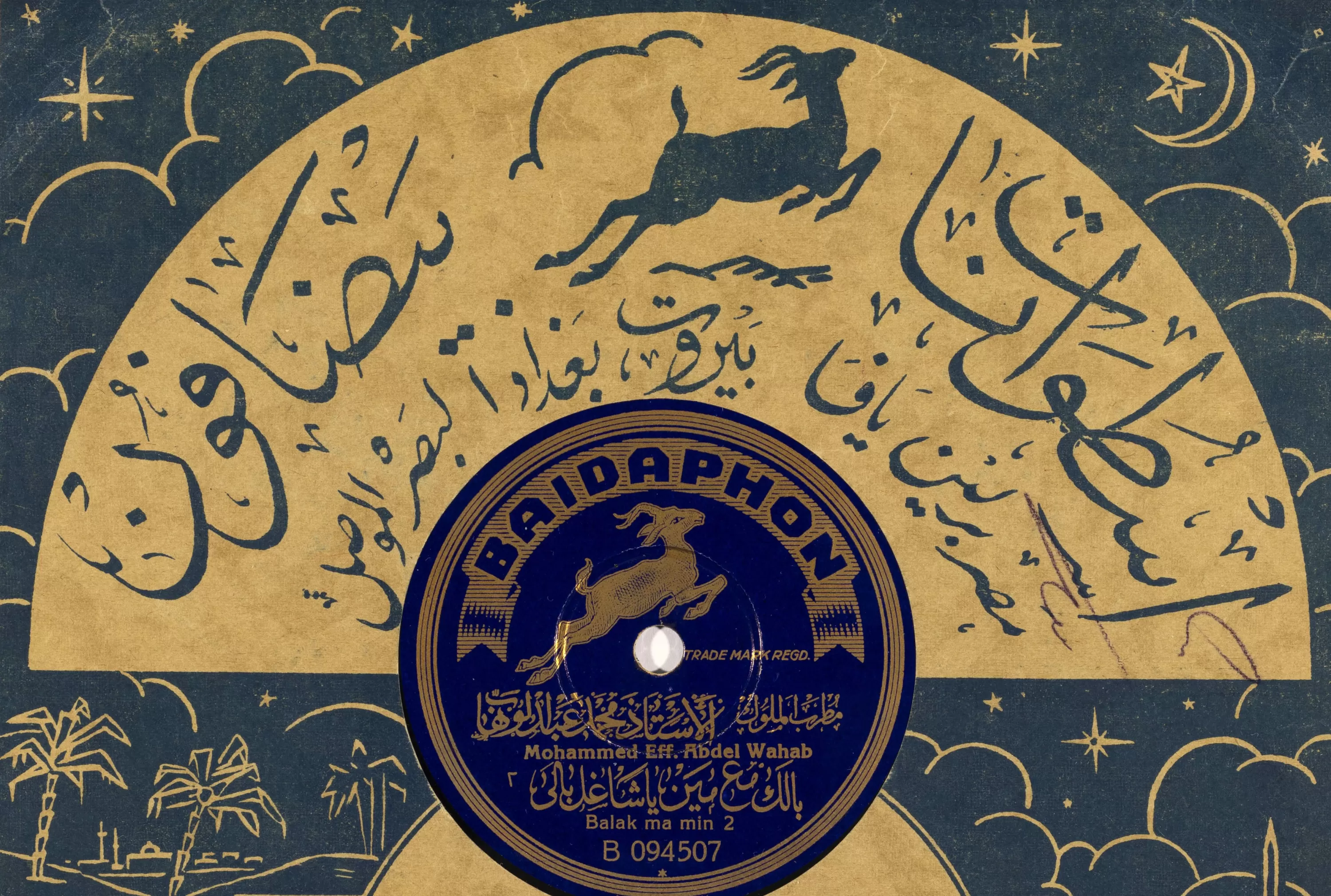
The exhibition is organised around three main areas of Palestinian musical history: education, recording, and broadcasting. It traces the emergence and development of structured music education in Palestine, the advent of recording technologies and the spread of records and tapes, and the role music came to play on the airwaves. Together, these developments reveal how musical knowledge and technologies were adapted within Palestinian and Arab contexts, how institutions and musical practices helped produce, preserve, and circulate sound, and how music’s relationship with everyday life has changed over the past century.
Alongside these histories, the exhibition navigates the place of song in the Palestinian experience through four paired themes: wedding and funeral, prison and procession, childhood and massacre, and mobilisation and solidarity. At a martyr’s funeral, song takes up the language of weddings. The procession becomes a deferred zaffa that returns the martyr to the community’s story and bridges the moment of loss and the continuum of life. On the inside, song sustains the prisoner’s connection to a time beyond the cell, while processions and chants turn the voice into a collective assertion of Palestinian presence in public space. Songs of childhood shape children’s relationship with the land; those recalling massacres preserve their imprint in aural memory. Songs of mobilisation and solidarity reach beyond Palestine, expanding the circle of support.
On the role of song in preserving Palestinian memory, Amer Shomali, Director of the Palestinian Museum, said: “When oppressed peoples around the world were denied the right to write and archive their own stories, songs became repositories of their histories, memories, feelings and dreams. Passed down from one generation to the next, they connected everyday experiences with social and political change. In this exhibition, we revisit the dreams we have sung and the memories and experiences preserved in song, recalling Mahmoud Darwish’s words: ‘and the tyrants’ fear of songs’.”
Jawad Ali, whose support, alongside Zahira Dahdul’s, was instrumental in bringing the exhibition online for audiences around the world, noted: “We are proud to be part of this extraordinary exhibition and to share Palestinian music, art, and culture with the world, helping to preserve our identity in the face of attacks and attempts at erasure.”
The exhibition invites audiences to explore the history of music and song in Palestine through a rich digital experience that brings together an array of recordings, audio and video clips, photographs, documents, artworks, and interpretive texts. By placing songs in their historical and social contexts, it sheds light on the lives of those who created and passed them on.
Explore My Name is the Palestinian People at: The Palestinian Museum - Music Exhibition