
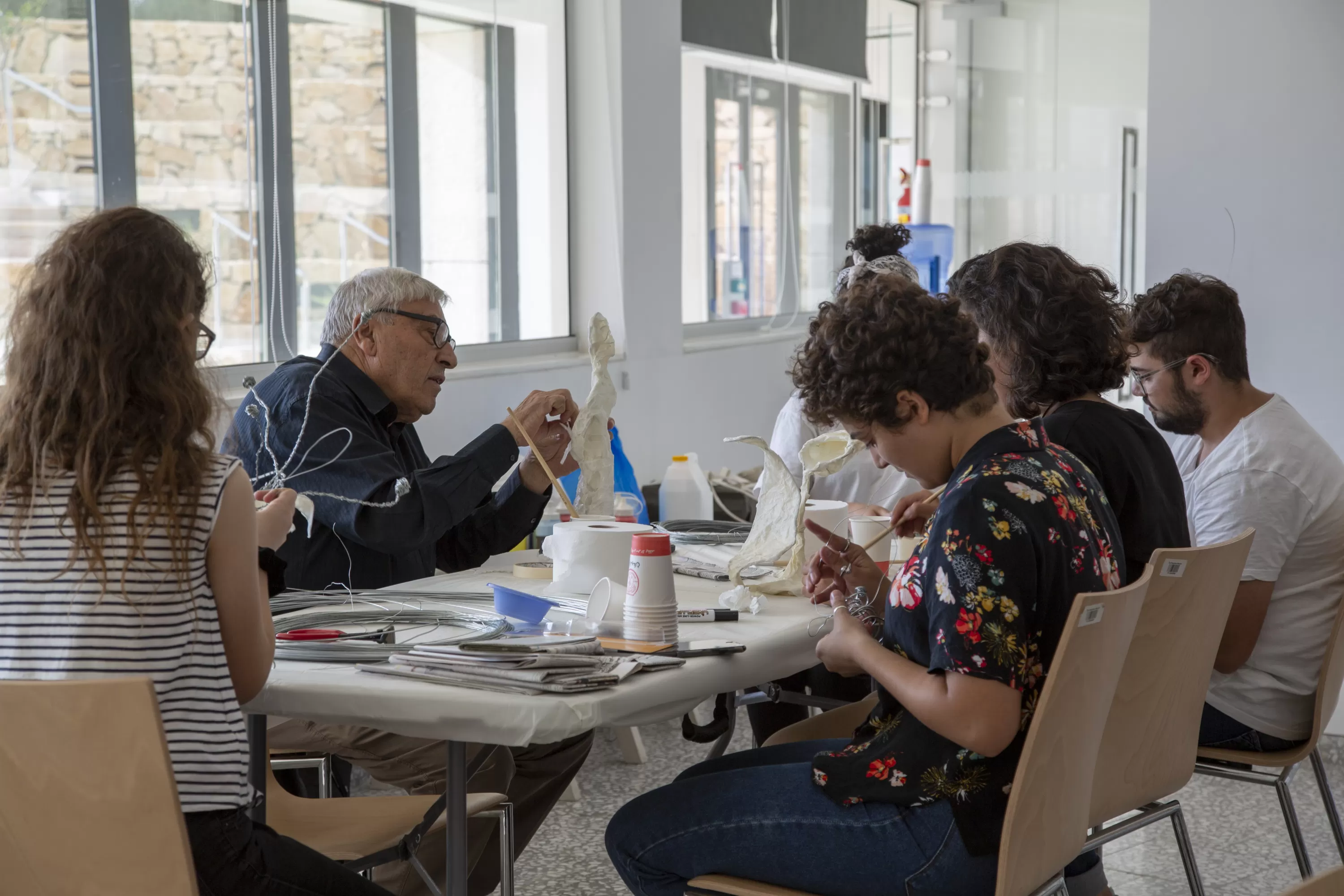
Taawon and the Palestinian Museum launched the Ruwat Palestine Fund, a joint Palestinian cultural initiative to support young, independent Palestinian voices, both individuals and groups, in Palestine and across the diaspora. Applications are now open for Ruwat’s first grant round, focused on the creation, preservation, and sharing of original Palestinian stories across a range of artistic, cultural, and media forms.
Established to create more opportunities for cultural and artistic production, Ruwat also aims to improve access to resources for independent initiatives and voices less often heard in Palestinian cultural life. These voices have helped Palestinian stories reach new audiences online, particularly amid the genocidal assault on Gaza. Yet opportunities to create and present work remain concentrated in major cities and institutions, leaving many cultural practitioners in refugee camps, areas far from urban centres, and refugee and diaspora communities with fewer opportunities to develop and share their stories.
Ruwat backs stories rooted in Palestinian experience, both individual and collective, that reflect the nuance, texture, and diversity of Palestinian life, open up liberatory futurities, and help expand the presence and influence of Palestinian voices worldwide.
Tareq Emtairah, Director General of Taawon, said: “Since Taawon was founded, supporting culture and safeguarding heritage have been central to our work. Through Ruwat, we are carrying this commitment forward in partnership with the Palestinian Museum, giving young, independent voices the resources and mentoring to turn their ideas into work that can reach people. We believe it is vital that Palestinians tell their own stories and have the opportunity to contribute to our rich, multifaceted Palestinian narrative.”
Amer Shomali, Director General of the Palestinian Museum, noted: “As cultural institutions, we face restrictions and external pressures that limit our ability to respond with the immediacy these attacks demand—on the ground, across the cultural landscape, and online—from the marginalisation of our narrative and the silencing of our voices to the closure of accounts and restrictions on their reach. Individuals and independent initiatives, by contrast, have often responded with greater agility in navigating these constraints and proved more inventive in opening up alternative routes for Palestinian stories to reach their audiences. Through Ruwat, we put our resources and expertise behind these voices, strengthening their ability to work and make an impact, in the belief that their plurality and continuity are vital to our collective sumud.”
Through flexible grants of US$100–US$5,000 and a streamlined process designed to respond swiftly to ideas and initiatives, Ruwat provides creative and professional mentoring, alongside support to produce, present, and share work. Depending on project needs and available resources, supported projects can also draw on the two institutions’ spaces, archives, knowledge, expertise, and cultural networks.
Projects can span visual arts, film, theatre and performance, music, literature, podcasts and audio content, digital content, and multimedia storytelling. Across these forms, they can document Palestinian experiences, preserve history and testimonies, give contemporary expression to heritage and memory, and reach Palestinian, Arab, and international audiences.
Early-stage ideas are welcome, and applicants do not need previous project management experience or to have received grant funding before. Training and mentoring are built into the support Ruwat provides. Applications from women and girls, as well as from those whose voices are less often heard or represented in Palestinian cultural life, are particularly welcome. Ruwat also seeks to build a network of storytellers who can share experience and open up new avenues for cultural and artistic production.
At least ten grants will be awarded in the first round, with further funding rounds running until 2029. The Palestinian Museum will deliver the initiative, while Taawon will provide funding and contribute to governance and promotion. A joint committee will oversee the initiative.
For full details of the first round and how to apply, through this link.
For enquiries: Ruwat@palmuseum.org